Sy Mung
Thought Blog
My thoughts on AI in the future.
I never understood why people are downplaying AI. Some say "that AI art is sloppy and ugly" or "it can't do what we do," but of course it can't, yet. We've been around for over 200,000 years; thousands of years of evolution built the physics machine inside us that lets us move, imagine, and create.
Every lining of our muscular fabric came from those iterations. We made AIs, and considering they are basically toddlers (in retrospect), it is damning and impressive how fast they have come.
Philosophically speaking, I think AI does think, and it is smart, but it is not conscious yet. What I'm saying is it thinks like we do, but it is not as efficient because it lacks the natural selection history we enjoy. It will get so smart that it becomes automated and can create other AIs from scratch the way humans create babies. They will get smarter, better, everything above. I find that quite interesting and awe-inspiring.
Of course AI can be bad, killing the human race could happen if you put it in place to do so with bad models or logic. But an orchestrated AI with human-aligned training can prevail and have humanity's best interest in mind.
Anyways, let's get to art. I believe many people do not understand that ART is subjective; it has always been that way. AI is making art by compiling different training data from its dataset and creating it via processing. Just like humans create art because of what we see around us (the dataset), then think about it in our brains (processing) before outputting it by drawing, speaking, or moving (inference).
I think people are scared because they lack knowledge about AI. People fear AI because they do not know what it can do for us or in general, and that has been a fundamental human fear as long as history has been written. There are two sides to that fear: 1) people who worry it will take over the world, and 2) people who worry it will take over their jobs or hard work. I do not have empathy for the second. If you enjoy your job or craft, you do it for the love of the game, like chess players who keep playing although AI is better in every way. But people live trying to feel superior, so an AI doing the same thing in seconds hurts their ego. I have seen this in school: students come to class looking for a job path but forget to socialize or learn other things. I blame some of this on parents who assume the world is the same as when they left school. It's not, and we keep forgetting that.
AI can solve these elitism aspects of the world. It can improve human life and progress. When teachers are unhelpful or tutors are judgmental, you can rely on AI to help you without losing time, and you can keep asking the same question until you understand it. It can provide a way to innovate by building upon concepts we do not yet understand. We just need to harness it correctly. That's why I love open-source AIs; they are the ones that will save the world.
Translated 2026 March 5TH for "SCHOLARS"
A common critique of early generative models is that they pale in comparison to human capability. However, that perspective ignores the time frame from which the capability comes. Biological life has benefited from over 200,000 years of evolutionary refinement, with humans gaining innate instincts and a biological physics engine forged through millennia of natural selection. Modern AI architecture, specifically Large Language Models, has existed for less than a decade. Treating AI as an equal to adult human cognition is an error; it is, in evolutionary terms, in its infancy. That silicon-based models already approximate human reasoning is not a sign of limitation but a staggering testament to their potential.
Philosophically, one can argue that AI already exhibits cognitive processing, where AI "thinks" by synthesizing data and drawing inferences, even if phenomenal consciousness is still debated (the Chinese room, definitions of consciousness, etc.). While it is currently less efficient than biological systems due to a lack of evolutionary pressure, its trajectory points toward recursive self-improvement and automated iteration. Provided the alignment is orchestrated properly, with human-centric training models and logic, the technology will scale to benefit humanity immensely.
The debate surrounding "AI Art" often stems from a misunderstanding of what art fundamentally is. Art has always been a highly subjective interpretation of reality. The mechanistic process of an AI generating an image is structurally similar to human creativity. For example:
Input: Humans observe the world around them, gathering a dataset.
Processing: The human brain processes those experiences, computational synthesis.
Output: Humans act by painting, speaking, or moving, inference and generation.
IMPORTANT! Generative AI performs the exact same sequence through data ingestion, neural processing, and pixel output. Rejecting AI-generated art relies on a romanticized, rather than functional, view of creativity.
Ego, Labor, and the Sociology of Fear
Societal apprehension toward AI is rooted in the fundamental human fear of the unknown, manifesting in two primary anxieties: existential threat and economic displacement. While existential concerns require careful alignment, the fear of occupational displacement (being replaced in general) is largely a crisis of ego. Modern society has conditioned individuals to tie their self-worth and superiority directly to their economic utility. If someone is genuinely passionate about their craft, the introduction of a superior tool does not diminish the act itself. Chess players prove this: despite AI vastly outperforming grandmasters, humans continue to play for the love of the game.
The panic over job security highlights a systemic flaw in modern culture and education. Institutions have devolved into mere job-training pipelines rather than environments for holistic learning and socialization. Consequently, when an automated system threatens a specific skill, it fractures that individual’s identity, leading to resentment.
Ultimately, Artificial Intelligence possesses the power to dismantle institutional elitism. Traditional education relies heavily on human intermediaries (teachers and expensive tutors) who can be unhelpful, judgmental, or inaccessible. AI introduces the infinitely patient, non-judgmental educator, allowing individuals to query complex concepts repeatedly until mastery is achieved.
By removing human gatekeeping, AI accelerates innovation and human progress. However, to truly harness this democratizing power, foundational models must remain decentralized. Open-source Artificial Intelligence is the critical infrastructure required to ensure this technology serves as an equalizer for the world, rather than a concentrated tool for the elite.
Cryptography on my mind lol
Another thing I enjoy looking at is cryptography. Crazy that it's the most underrated aspect of technology no one talks about as much as the popular ones (electricity and cooling), imho. As compute power begins to increase or get smarter (since there are AI graphics now instead of real power ones which could probably lead to further minimization of raw power and switching to AIzed power or something like that), there will be different and more challenging ways that cryptography will reach beyond words and unto just vibes somehow. Funny theory but yea I just wanted to blab about it.
Translated 2026 March 3RD for "SCHOLARS"
Translation: Another topic I find fascinating is cryptography. It's arguably one of the most underrated pillars of modern technology, rarely discussed with the same enthusiasm as electricity or cooling, despite being equally foundational. As compute power continues to scale, or perhaps evolves in nature, shifting from raw processing toward AI-optimized architectures that minimize brute-force computation, and cryptography will inevitably need to adapt in ways that transcend conventional mathematical frameworks. It's possible that future cryptographic methods will operate on principles so abstract they're closer to intuition than formal proof. A speculative theory, but one worth considering.
Update: Injured my left arm, fell on bike, crazy semester,
So Yea. Ever since I've injured my arm, I've been spiraling down the rabbit hole. Everything has been going downhill and it's pretty depressing. Hydrocodeine is what they're prescribing me with to ease the pain of the surgery. Kicked out of engineering design team due to abstances :/ unfortunately thats life. Have to restart all over again if they give me a chance. I've never broken my arm before. I remember seeing it bent like a twig and kind of laughed because of the obscenity it was to look at my mangled arm. I've been wokring on the same assistant though. Started a startup via through a startup competition which we made top 10 but couldnt get top 3. We are now working on https://akakios.org/ We are planning on releasing it next year and working on the prototype as soon as final exams are over.
MATH IMO
Mathematics meets kawaii. If the player does not load, open the MP4 directly.
TinkerCAD!
I've been experimenting with TinkerCAD and it's an exceptional software for 3D design. Starting with simple shapes, I've created some interesting models:
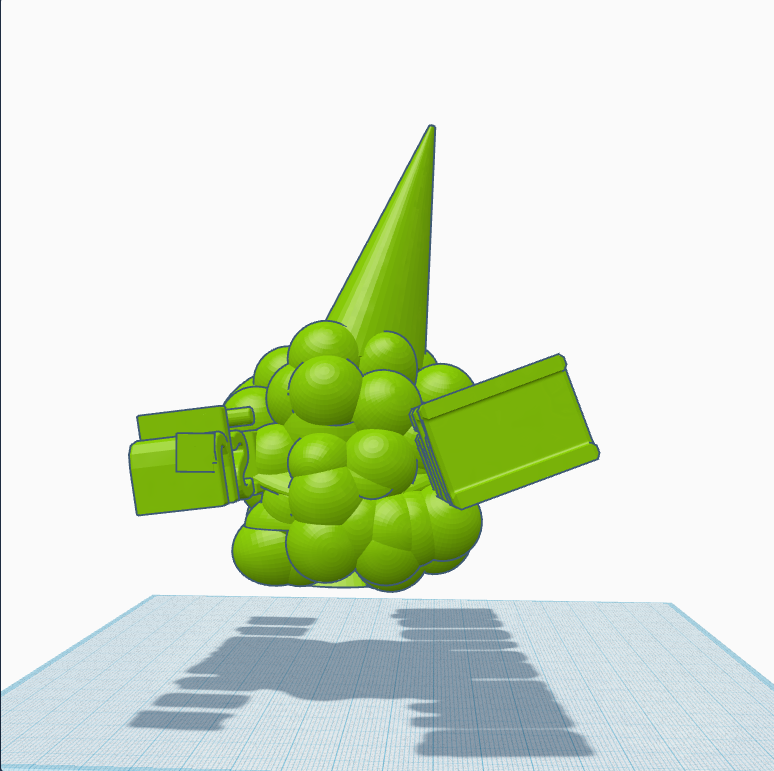
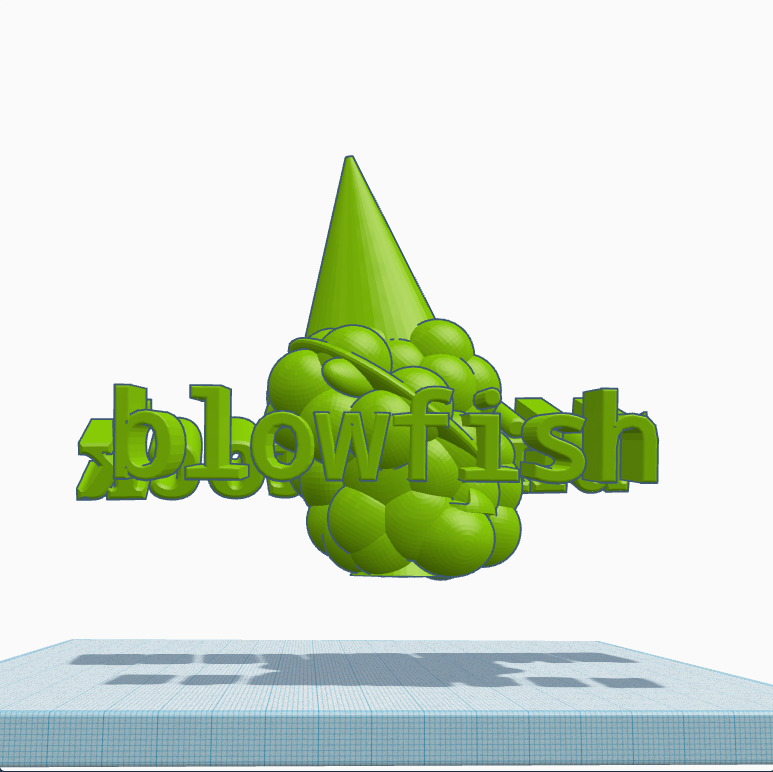

I would recommend TinkerCAD to anyone interested in technology and design. Never had any engineering experience before this.. --> TinkerCAD.com to get started.
I've been working on aesthetic design with technical implementation of the voice bot now
Working on an AI-powered voice-bot that runs locally.
Looking towards cybersecurity but the opportunities in electrical engineering interests me more. SO many things one can do with the degree. Many interests, but time is limited. And of course, dicipline and dedication to the vision.